Blog
What Size Generator Do I Need for My Home in the Tri-Cities and Yakima Areas?
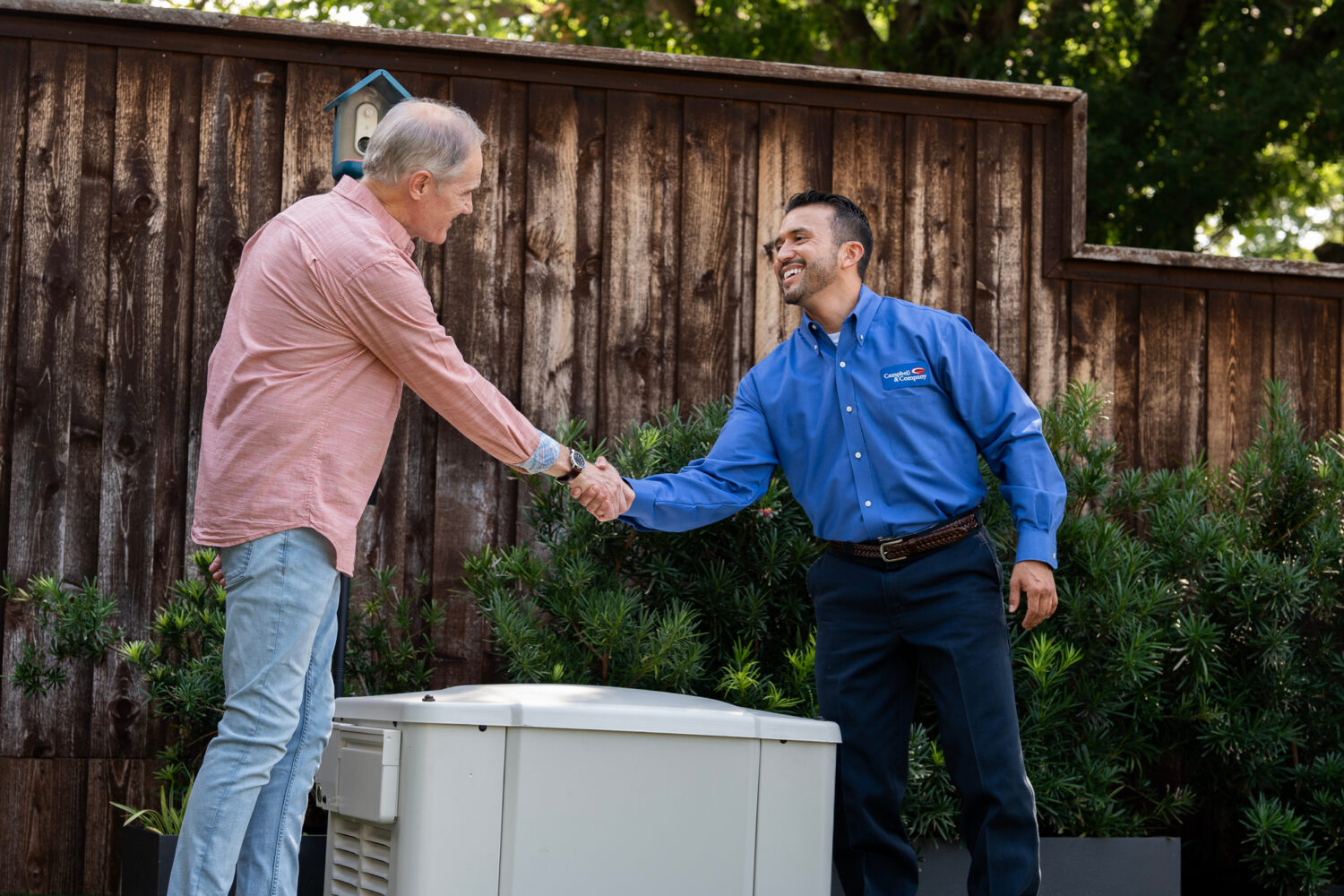
Power outages in the Tri-Cities and Yakima areas create problems during summer heat waves, winter storms, and seasonal wind events. When temperatures climb past 90 degrees or freezing weather moves through the Columbia Basin, losing power affects everything.
Many homeowners asking “What size generator do I need?” are trying to protect refrigeration, heating and cooling equipment, medical devices, internet access, and other daily essentials during an outage.
Choosing the right generator size helps prevent overload, protects important systems, and avoids paying for capacity the home may never use.
Campbell & Company provides generator installation services across Yakima, Kennewick, Pasco, Richland, and Ellensburg. Schedule online today to discuss backup power options for your home.
Why Generator Size Matters
An undersized generator will not handle the wattage requirements needed to keep critical systems running during an outage. HVAC equipment, refrigerators, sump pumps, and well pumps often require additional startup power before settling into normal operation.
At the same time, an oversized system can increase installation costs without adding practical value for the home. Proper home generator sizing focuses on balancing backup power needs with the systems homeowners want operating during an outage.
How to Determine the Right Generator Size
Generator sizing starts with a load calculation. This helps determine how much electricity the home needs during an outage.
Important factors include:
- Running power requirements
- Startup demand for larger appliances
- Heating and cooling systems
- Refrigerators and freezers
- Medical equipment
- Lighting and outlets
- Water heaters and well pumps
A generator for house backup should be sized around the systems homeowners consider most important during a power outage.
What You Should Power During an Outage
Most homeowners begin by prioritizing essential appliances and critical circuits.
Common priorities include:
- Refrigeration
- Internet and communication devices
- HVAC systems
- Lighting
- Medical equipment
- Garage door openers
- Kitchen outlets and appliances
Larger systems support full-home operation, while smaller systems focus on keeping the most important areas operational. A whole home generator size recommendation depends on the layout of the home, electrical demand, and daily usage habits.
Whole-Home vs Partial Backup Systems
Whole-home systems are designed to power nearly everything in the house during an outage. These systems provide convenience and allow homeowners to continue using heating, cooling, appliances, and electronics normally.
Partial backup systems focus on selected circuits instead of the entire home. This option can reduce installation costs while still providing backup power for essential appliances and safety systems.
The right choice depends on power goals, budget, and how much interruption homeowners are willing to tolerate during outages.
Why Generators Are Important in Tri-Cities & Yakima
Power outages are common across the region during storms, freezing temperatures, and periods of heavy grid demand. Homes throughout Yakima, Richland, Pasco, Kennewick, and Ellensburg deal with weather extremes that place extra strain on electrical systems.
Summer temperatures regularly push past 90 to 100 degrees, increasing dependence on cooling systems. Winter outages can also create plumbing risks when homes lose heat during freezing weather.
Reliable backup power helps homeowners protect HVAC systems, refrigeration, plumbing, and other essential equipment during regional outages near I-82, I-182, and surrounding communities.
Generator Planning for Desert Climate Conditions
Eastern Washington’s climate creates unique power demands throughout the year.
Summer heat increases electrical demand as air conditioning systems run longer to keep homes cool. Winter storms create additional concerns involving frozen pipes, heating system shutdowns, and extended outages.
Some homeowners also explore solar and standby generator combinations for long-term backup power planning in the Yakima Valley and Columbia Basin.
When to Call a Professional
Proper generator sizing requires evaluating the home’s electrical demand, startup loads, and long-term backup goals.
Professional installation helps ensure:
- Safe electrical integration
- Proper load calculation
- Correct transfer switch setup
- Code compliance
- Reliable standby generator operation
Working with experienced electricians helps homeowners avoid costly mistakes caused by incorrect sizing or unsafe installation practices.
Why Homeowners Trust Campbell & Company
Campbell & Company has served homeowners across the Tri-Cities, Yakima, and Ellensburg areas since 1983. Our local technicians understand the power challenges created by summer heat, winter freezes, and regional storms throughout Eastern Washington.
Homeowners also trust our electrical services team for safe generator integration, system planning, and long-term support. Financing options are available for larger generator projects, and homeowners enrolled in a maintenance plan can stay ahead of seasonal system issues year-round.
To learn more about backup power solutions or schedule generator planning, contact us today.
Schedule OnlineFrequently Asked Questions
Generator sizing depends on the total electrical load the home needs during an outage, including startup demand for major appliances and HVAC equipment.
Yes. Some standby systems are large enough to power nearly the entire home during an outage.
Most homeowners prioritize refrigeration, HVAC systems, lighting, internet equipment, and medical devices.
Standby generators with automatic transfer switches can start automatically when utility power is lost.
Professional installation is strongly recommended for safe electrical integration and proper system sizing.